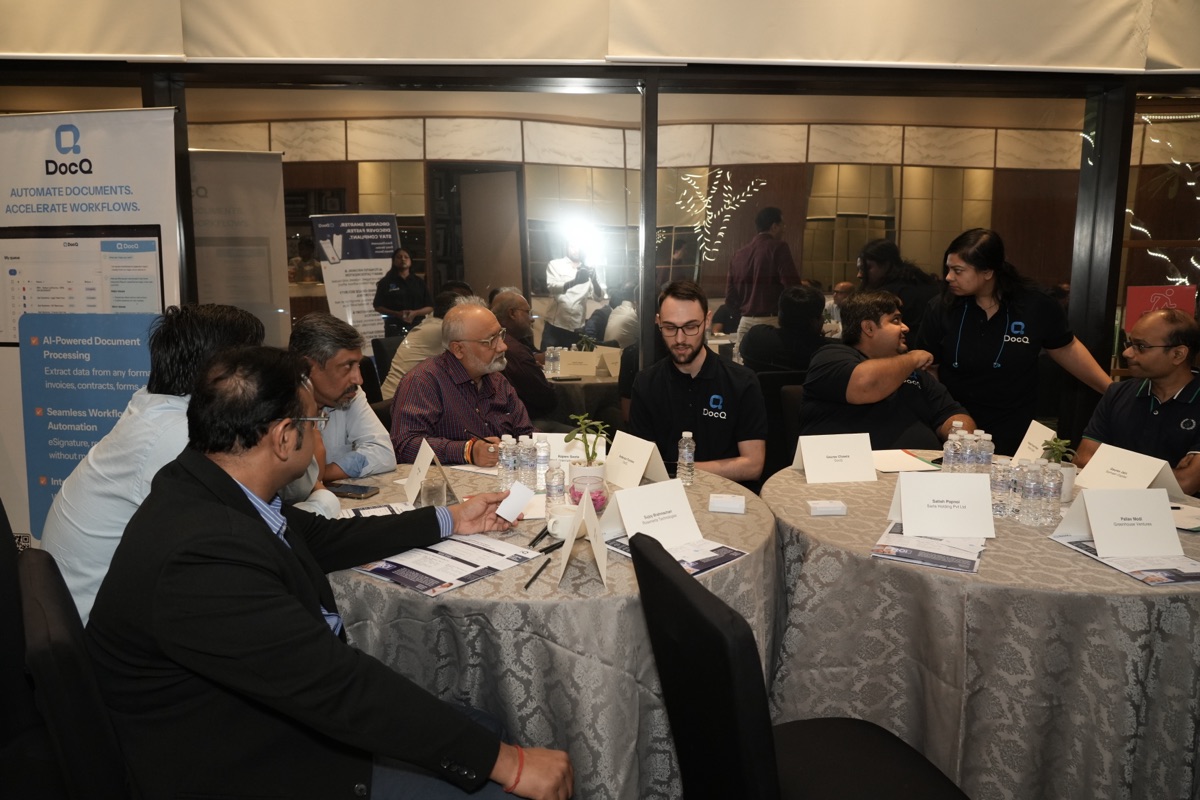
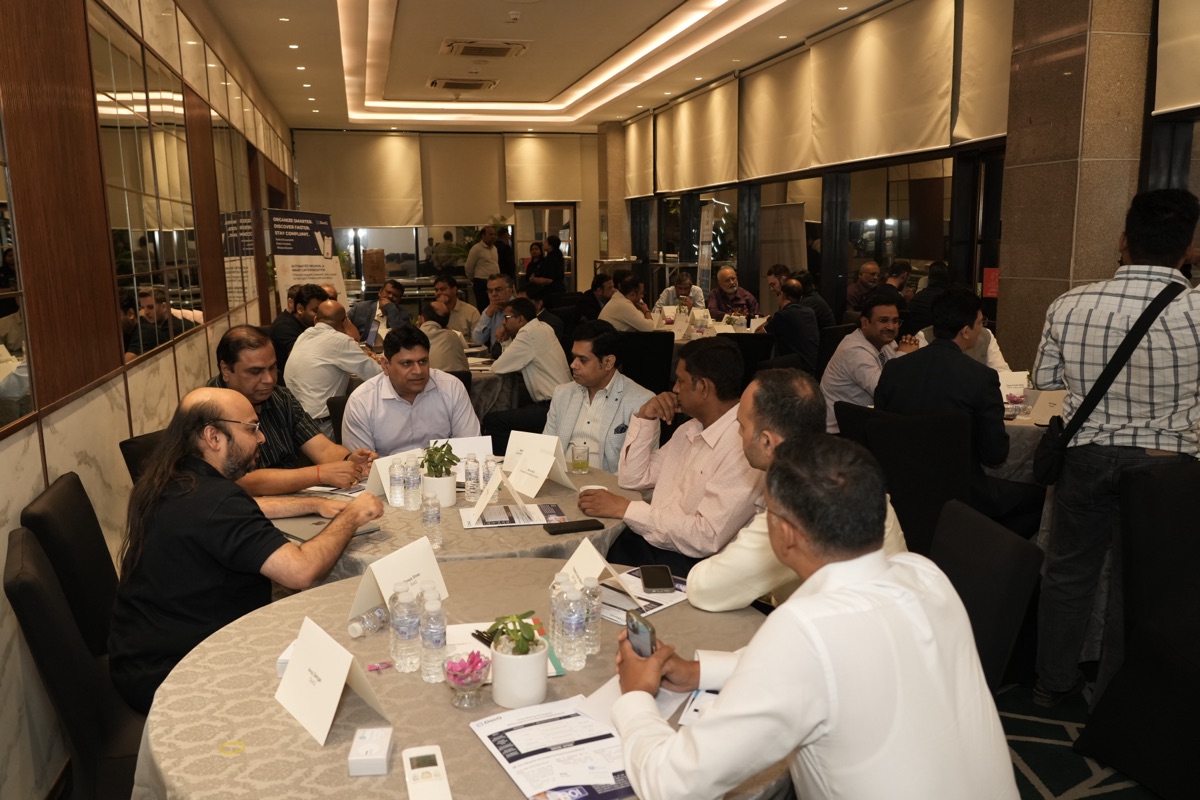
The Enhancing AI Agility Through Low-Code / No-Code Platforms table at the executive roundtable in Delhi NCR brought together one of the most diverse groups of the evening. Automotive manufacturing, education, fintech, real estate, QSR, chemicals, and an early-stage startup — all sitting around the same table, all facing a remarkably similar set of problems.
The common thread wasn't industry. It was friction. Too much data sitting in too many systems, too many manual steps between input and insight, and too little ability for business teams to fix it themselves without filing an IT ticket and waiting months.
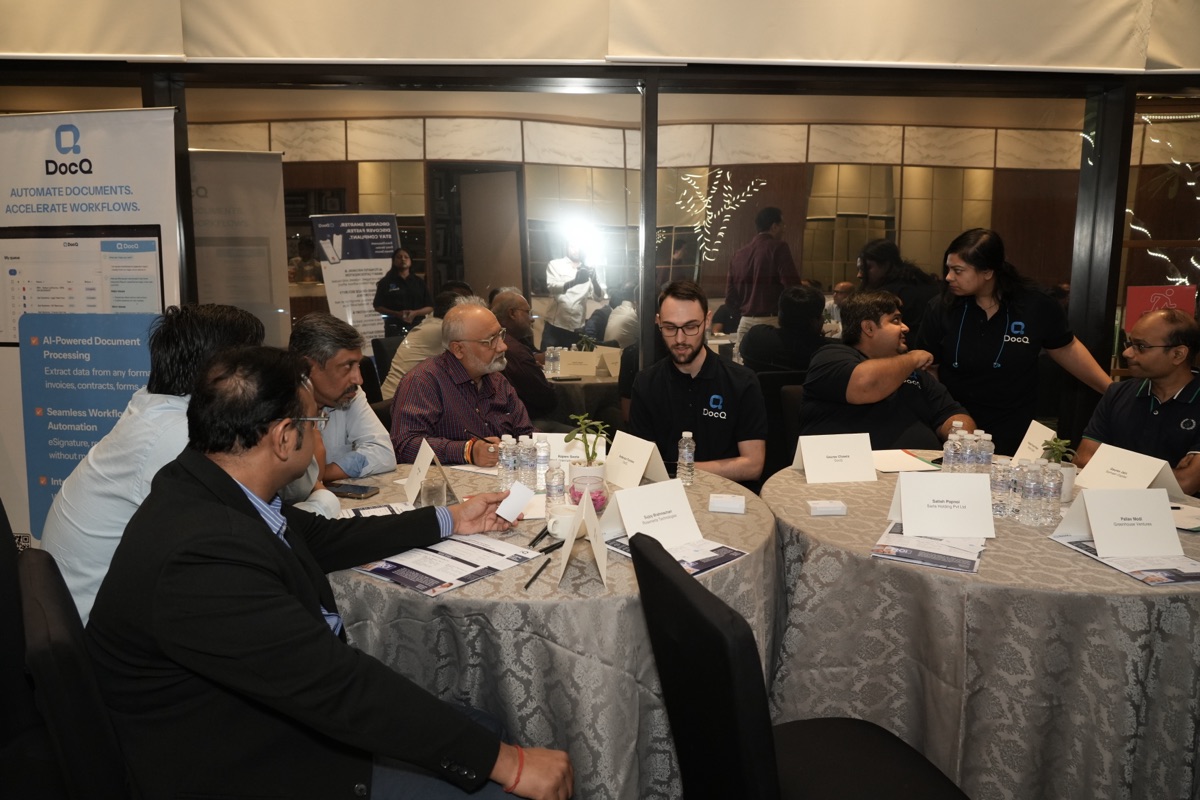
The Shared Frustration
What made this conversation distinctive was how quickly it moved past the "why" and into the "how." Nobody at the table needed to be convinced that low-code/no-code platforms matter. They'd all already felt the cost of not having them.
The frustration showed up differently depending on the organization — legacy ERP systems that can't be extended without six-figure projects, document management tools that don't actually manage documents, siloed data that forces teams to manually reconcile information across platforms. But the underlying pattern was the same: business teams have outgrown the tools IT can provision for them.
The question that shaped the rest of the conversation: How do you give teams the power to build what they need without creating a governance nightmare?
What Each Leader Brought to the Table
Rajeev Soota (USHA International) described the challenge of turning scattered sales and inventory data into reliable forecasts. With operations spanning multiple product lines and distribution channels, the gap between data collection and actionable planning is a constant drag on decision-making. His interest centered on AI-assisted forecasting that business teams could configure without waiting on IT.
Sujoy Brahmachari (Rosemerta Technologies) brought a technology-forward perspective on AI-powered document categorization and cross-department data correlation. He highlighted the tension between wanting AI to surface connections across departments and the privacy and compliance constraints that make open data sharing risky. The need for granular access control alongside intelligent automation was a recurring theme in his comments.
Ajay Yadav (SBL) shared the reality of running SAP alongside operational needs that SAP's native tools can't easily address. His team had explored low-code tools to build scanning and search capabilities around SAP's slow document management, essentially creating a faster layer on top of existing enterprise infrastructure rather than waiting for SAP to evolve.
Dinesh Singh (SKH Group) outlined the challenge of data scattered across multiple platforms with no unified view. Different departments using different tools, different formats, different workflows — and no easy way to connect them. His vision was clear: configurable workflows that each department could adapt to their specific needs without requiring a centralized IT build for every request.
Rahul Puri (Devyani International) brought experience from deploying Zoho Creator alongside SAP DMS across multi-brand QSR operations like Pizza Hut and KFC. He raised specific interest in AI-powered clause detection for contracts and compliance-driven automated data deletion — areas where low-code configuration could replace what currently requires manual legal and compliance review.
Satish Papnoi (Sarla Holdings) focused on the education side of the group's operations, where templated document generation — student certificates, transcripts, compliance records — consumes significant administrative time. He described the need for Oracle-integrated automation that could generate, route, and archive documents with built-in lifecycle management, including automated deletion when retention periods expire.
Gaurav Jain (Sammaan Capital) detailed the limitations of existing document management in fintech: poor OCR accuracy, inflexible workflows, and too many manual steps for something as straightforward as processing ID documents. His ask was direct — simpler, more accurate automation that doesn't require a development team to maintain.
Pallav Modi (Greenhouse Ventures) brought the startup perspective, where agility is the entire value proposition but data silos still emerge fast. From inventory management to product artwork approval workflows, his team needed tools that could be stood up quickly, adapted as the business evolves, and connected across the handful of systems a growing company accumulates in its first years.
Where the Conversation Converged
Despite spanning eight industries and organizations of vastly different scale, the table arrived at a clear set of shared conclusions:
Low-code/no-code is no longer a nice-to-have — it's a deployment strategy. The organizations moving fastest aren't the ones with the biggest IT teams. They're the ones where business users can configure their own workflows, set their own rules, and adapt their own processes without waiting in a development queue.
Integration is the real bottleneck. Every leader at the table had tools that worked in isolation but couldn't talk to each other. SAP, Oracle, Zoho, custom databases — the data exists, but getting it to flow between systems without manual intervention is where most organizations stall.
Compliance and audit trails can't be afterthoughts. From fintech KYC to education record retention to contract clause detection, every use case at the table had a governance dimension. The consensus: automation tools that don't build in access control, audit trails, and retention policies from day one create more risk than they eliminate.
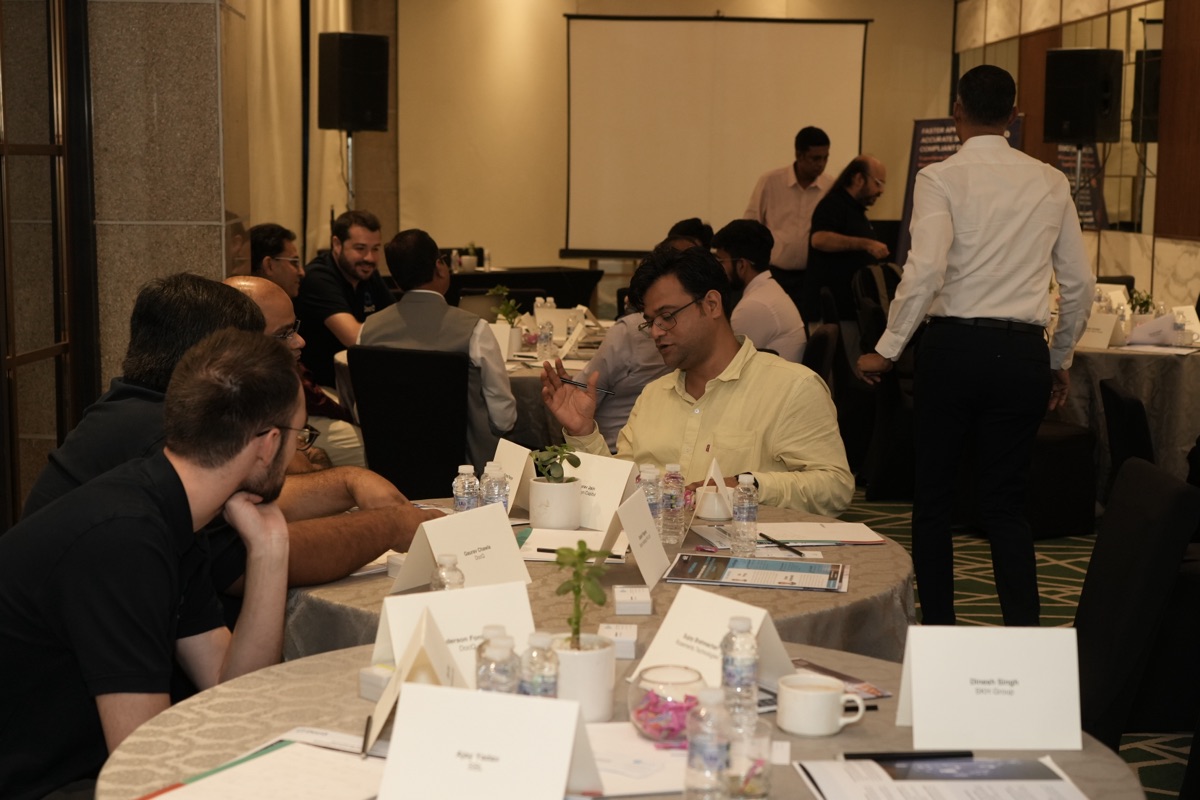
From Manual Steps to Configurable Flows
The low-code/no-code table reinforced a pattern that ran through every discussion at the event: the organizations that win aren't necessarily the ones with the most advanced technology — they're the ones that remove the most friction between a business need and a working solution.
DocQ's approach to this challenge is built around exactly that principle:
- No-code workflow configuration — approvals, routing, escalations, and validations without writing code
- AI-powered document intelligence — OCR, classification, extraction, and search that works across formats and languages
- Enterprise integration — connectors and scripting that bridge the gap between existing systems, even legacy ones
- Built-in governance — audit trails, access control, retention policies, and compliance readiness from day one
The message from the table was consistent: give business teams the tools to solve their own problems, make sure those tools connect to the systems that already exist, and never compromise on security and compliance. That's the low-code/no-code promise — and it's what every leader at the table is actively working to deliver.
Let's Continue the Conversation
If your organization is navigating similar challenges — whether it's building faster layers on top of legacy ERP, automating document-heavy processes, or giving business teams the power to configure their own workflows — we'd love to explore how DocQ can help.
Get in touch to schedule a focused conversation around your priorities.
This roundtable recap covers the "Enhancing AI Agility Through Low-Code / No-Code Platforms" table at the Next-Gen Operations executive roundtable, held May 15, 2025 at Le Méridien, Sector 26, Gurgaon. Organized by DocQ in cooperation with FnShift Solutions.