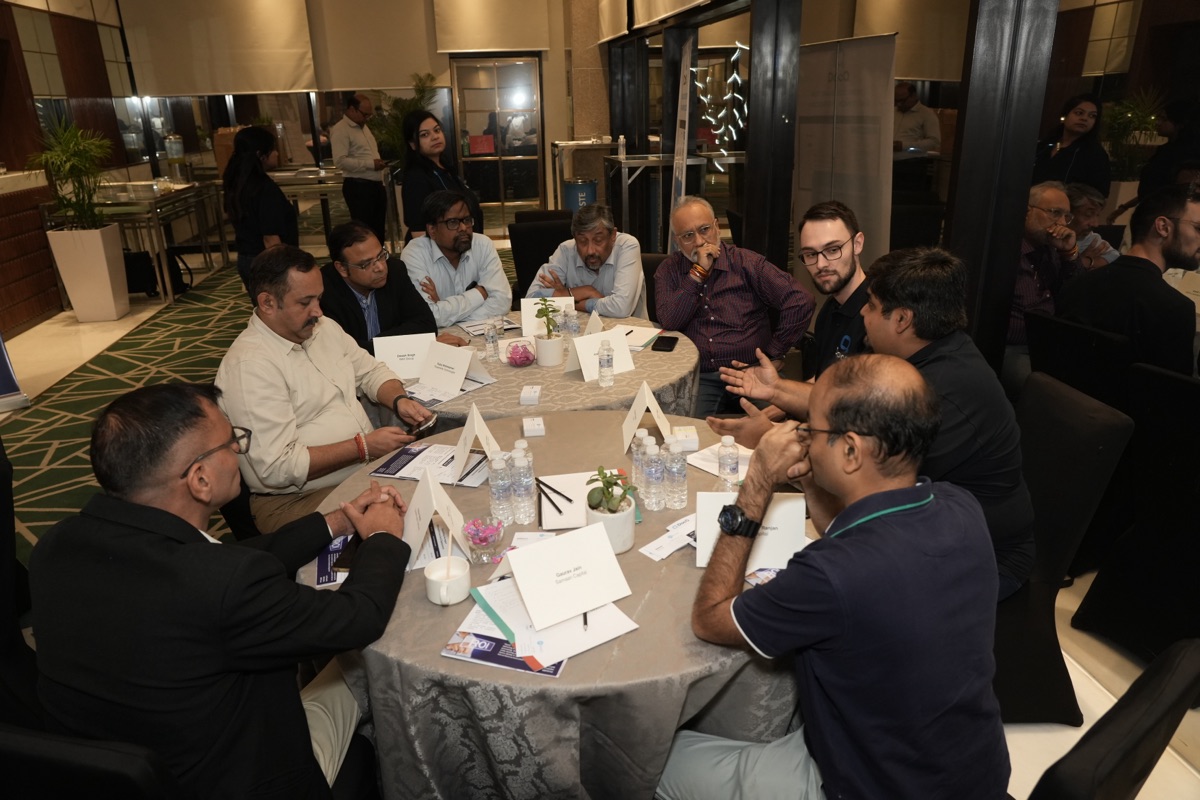
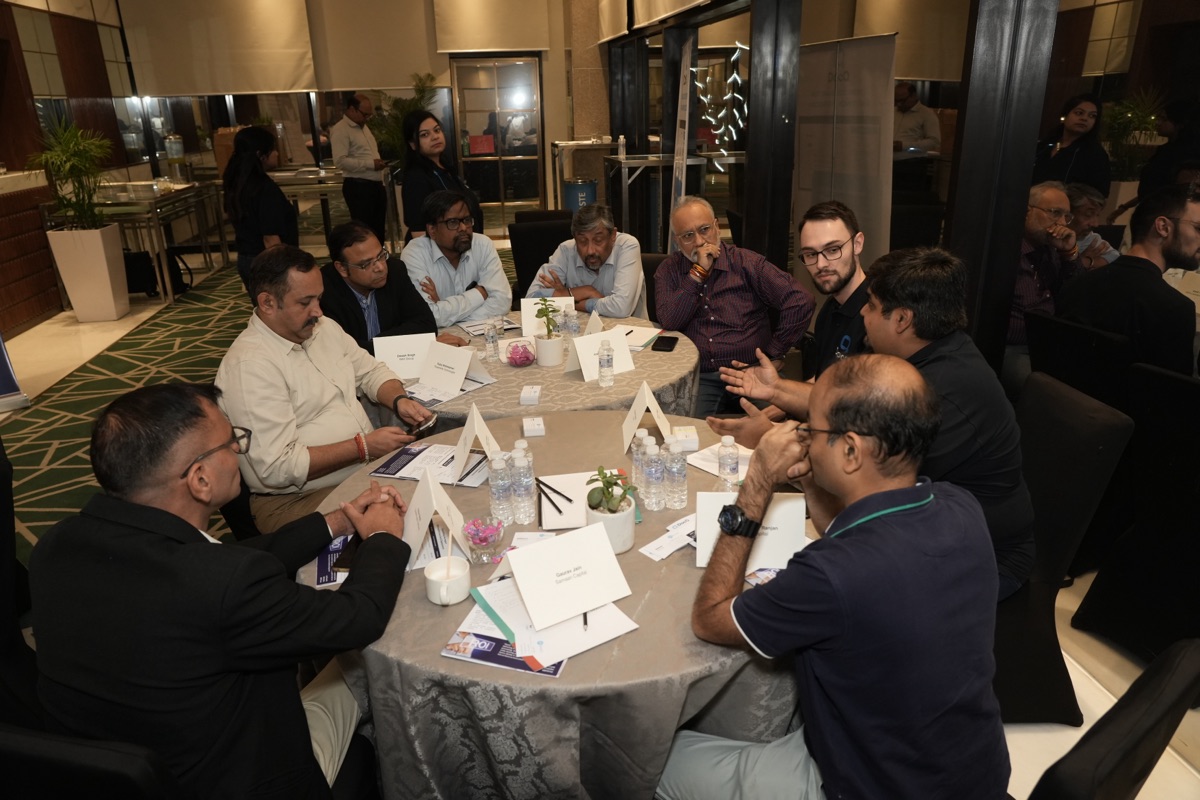
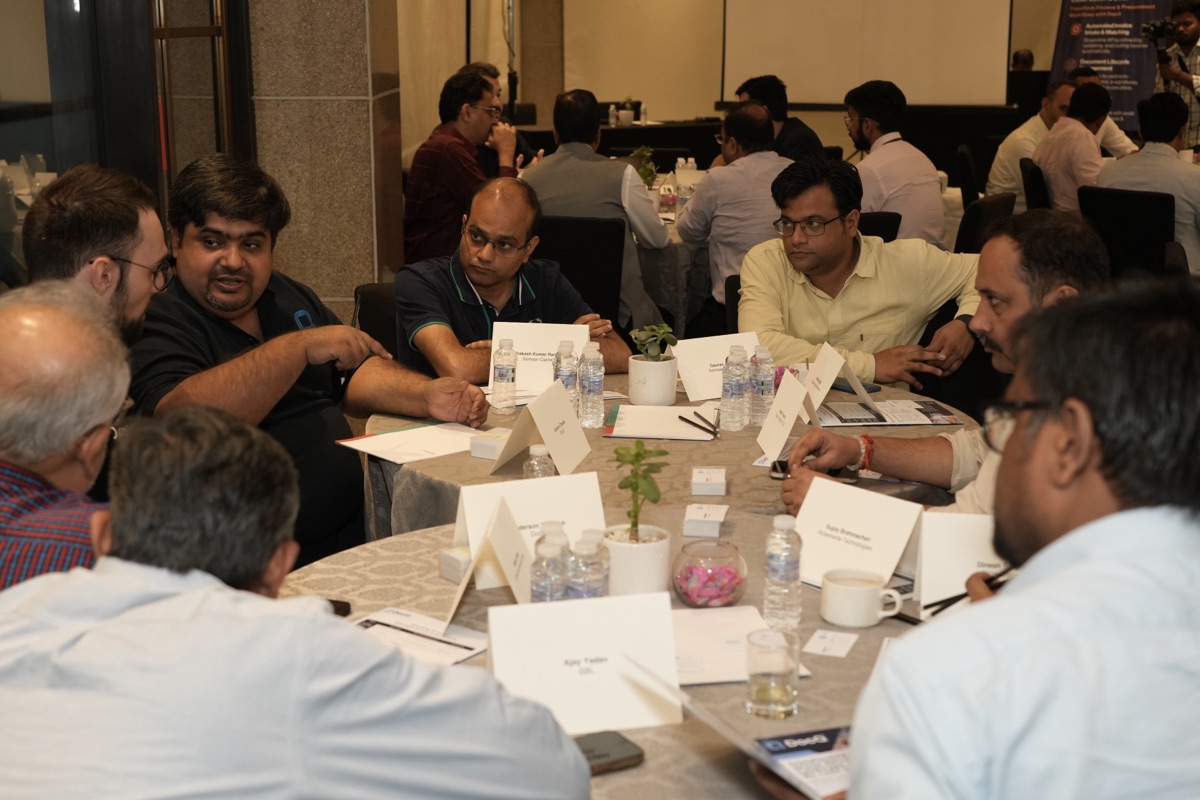
The Building Trust, Governance & Risk Controls at Scale table brought together leaders from industries where getting it wrong isn't just expensive — it's regulated. Food and beverage, pharmaceuticals, automotive manufacturing, and wine production. Different sectors, different compliance frameworks, but a strikingly similar set of operational realities.
The question that framed the entire conversation: how do you scale operations without losing control?
Every organization at the table was growing. Every one of them was dealing with more data, more processes, more systems, and more regulatory scrutiny than they had five years ago. And nearly all of them were still relying on manual steps, fragmented tools, and human judgment calls to hold it all together.
The Compliance Paradox
What made this table's conversation distinctive was the tension between speed and control. Every leader wanted to move faster — automate more, reduce manual handling, give teams better tools. But every leader also operated in an environment where a single compliance gap, a missed audit trail, or a misrouted document could trigger real consequences.
The paradox isn't new: the faster you try to move, the harder governance becomes. But the table quickly moved past the paradox itself and into the practical question of what systems and approaches actually solve it — rather than just adding another layer of manual review on top.
The shared realization: most governance failures aren't caused by people doing the wrong thing. They're caused by systems that make it too hard to do the right thing — inconsistent data, disconnected workflows, and processes that depend on individual memory rather than automated enforcement.
What Each Leader Brought to the Table
Vishal Jain (Del Monte) described the challenge of maintaining process continuity and compliance across food and beverage operations. His team needed AI-powered OCR and structured forms to streamline data capture, but the real constraint was integration — specifically with HRMS tools where APIs weren't available. When your systems don't talk to each other natively, every compliance requirement becomes a manual reconciliation exercise. His focus was on finding automation that could bridge those gaps without requiring a full systems overhaul.
Sunil Gubrani (Fratelli Wines) brought the reality of operating with decentralised data across a wine production and distribution operation. The struggle wasn't a lack of data — it was maintaining operational consistency when that data lived in different systems, different formats, and different departments. His priority was process automation that could reduce manual handling and, critically, reduce the risk that comes with it. When compliance depends on humans remembering to follow procedures, the risk compounds with every manual step.
Ajay Ajmera (Rockman Industries) returned to the event with a team lead, reinforcing a point he'd raised earlier in the evening: data is scattered across platforms, and there's a growing need to unify it, automate core processes, and reduce human dependency. In automotive manufacturing, where production schedules, supply chain data, and quality records all need to be synchronized, the cost of manual data handling isn't just inefficiency — it's risk. His vision was clear: a unified view that connects what's currently disconnected, with automation that enforces consistency rather than hoping for it.
Balmukund Keshav (Jagsonpal Pharmaceuticals) outlined challenges that are familiar across the pharma industry: extracting and structuring data from legacy systems, integrating with HRMS platforms, and automating compliance-heavy operations. In pharmaceuticals, where regulatory requirements are particularly stringent, the margin for error in document handling and process execution is essentially zero. His team needed tools that could work with existing legacy infrastructure while adding the intelligence and automation layers that modern compliance demands.
Where the Conversation Converged
Despite spanning four distinct industries with different regulatory environments, the table arrived at a remarkably consistent set of conclusions:
Compliance isn't a checkbox — it's a capability. The most important insight of the evening. Organizations that treat compliance as something bolted on after the fact will always struggle. The ones moving fastest are building compliance into the workflow itself — automated audit trails, enforced access controls, retention policies that execute themselves.
Integration with legacy systems is non-negotiable. Nobody at the table was starting from scratch. Every organization had existing ERP, HRMS, or operational systems that couldn't simply be replaced. The automation layer needs to work with what's already there, not demand that everything be rebuilt first.
Manual handling is the primary source of risk. Every compliance gap the table discussed traced back to the same root cause: a manual step that could be skipped, forgotten, or done inconsistently. The consensus was that reducing human dependency in repetitive, rule-based processes isn't about eliminating people — it's about eliminating the conditions that make mistakes inevitable.
Governance needs to be invisible to work. The best compliance systems are the ones teams don't have to think about. When audit trails generate automatically, when access controls enforce themselves, when retention policies execute on schedule — that's when governance actually scales. If compliance requires conscious effort at every step, it will always be the first thing sacrificed under time pressure.
From Risk to Resilience
The governance table reinforced a principle that ran through every conversation at the event: the organizations that scale successfully aren't the ones with the most controls — they're the ones where the right controls are embedded in the workflow itself.
DocQ's approach to governance and compliance is designed around exactly this principle:
- No-code workflow configuration — approvals, routing, escalations, and validations with built-in enforcement, not manual checklists
- AI-powered document intelligence — OCR, classification, extraction, and search that structures data at the point of capture, not after the fact
- Enterprise integration — connectors and scripting that bridge legacy systems, including environments where native APIs don't exist
- Built-in governance — audit trails, granular access control, retention policies, and compliance readiness that operate automatically, not by exception
The message from the table was unambiguous: governance at scale requires systems that make compliance the default, not the exception. When the right thing to do is also the easiest thing to do, that's when trust is built — and that's when organizations can grow without the risk growing alongside them.
Let's Continue the Conversation
If your organization is navigating similar challenges — whether it's structuring data from legacy systems, automating compliance-heavy processes, or building governance into your workflows from day one — we'd love to explore how DocQ can help.
Get in touch to schedule a focused conversation around your priorities.
This roundtable recap covers the "Building Trust, Governance & Risk Controls at Scale" table at the Next-Gen Operations executive roundtable, held May 15, 2025 at Le Méridien, Sector 26, Gurgaon. Organized by DocQ in cooperation with FnShift Solutions.